

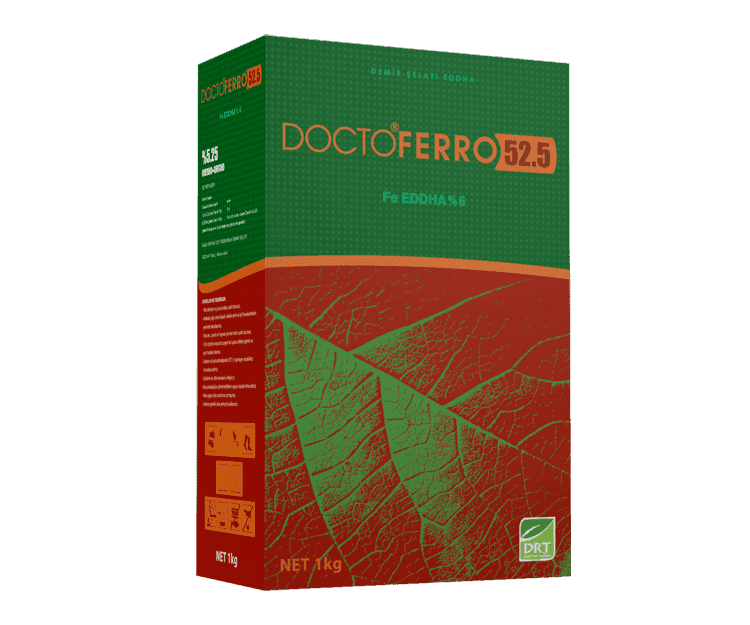
DoctoFerro 5.25
Iron: Essential for Plant Vitality
Iron is one of the vital micronutrients required for essential metabolic activities in plants. It plays a key role in chlorophyll synthesis and is involved in oxidation-reduction reactions within plant cells.
When iron deficiency develops, the first symptoms typically appear as interveinal chlorosis on young leaves, where the leaf veins remain green while the surrounding tissue turns yellow. This leads to impaired photosynthesis, resulting in reduced yield and quality.
Why Does Iron Deficiency Occur Despite Iron-Rich Soils?
In Mediterranean countries such as Italy, Spain, and Turkey, soils may be naturally rich in iron. However, due to high pH levels, iron becomes bound in the form of iron hydroxides, which are insoluble and thus unavailable to plants.
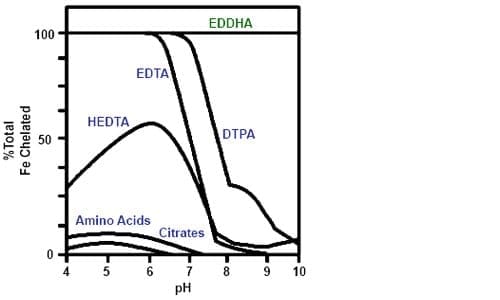
Even though total soil iron may be sufficient, plants may still exhibit chlorosis. As long as pH remains high, the iron in the soil is not plant-available. In these cases, chelated iron fertilizers must be regularly applied.
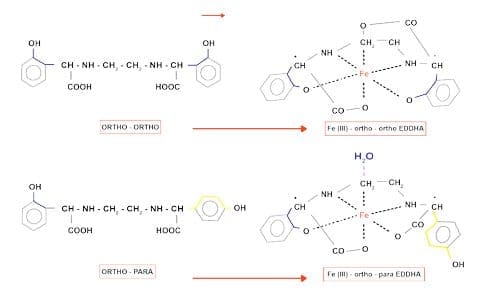
Among the various iron chelates, EDDHA is considered the most effective for soil application, especially in high pH soils. Within EDDHA chelates, those with a high percentage of the ortho-ortho isomer are the most efficient and stable.
What Makes DoctoFerro 5.25 So Effective?
DoctoFerro 5.25 contains iron chelated with EDDHA, with a high ortho-ortho isomer content, ensuring exceptional stability and availability in alkaline soils.
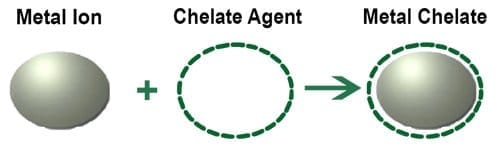
Chelates are molecules that protect essential metal nutrients from becoming unavailable in the soil. A chelate is composed of three parts:
-
The metal ion (e.g., Fe³⁺),
-
The chelating agent (e.g., EDDHA, EDTA, DTPA, amino acids, humic/fulvic acids, citrates),
-
A balancing ion (e.g., Na⁺ or NH₄⁺).