
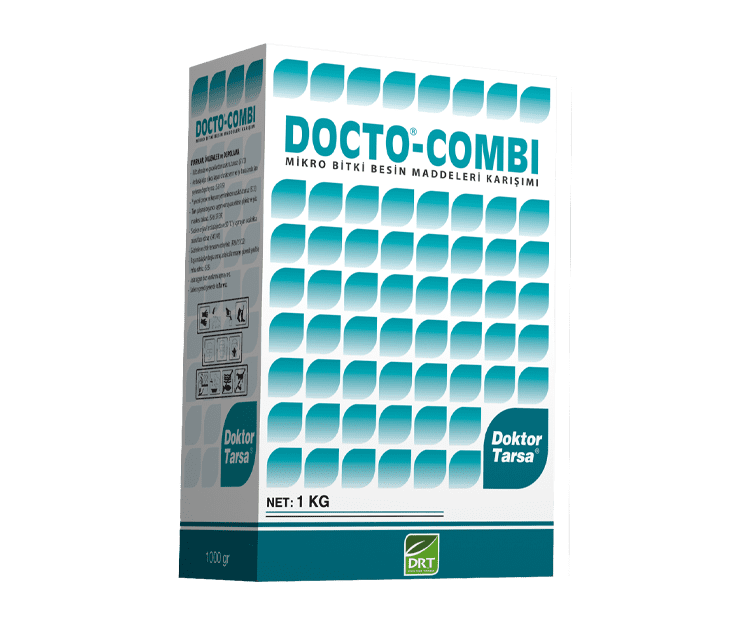
| CONTENT | % w/w |
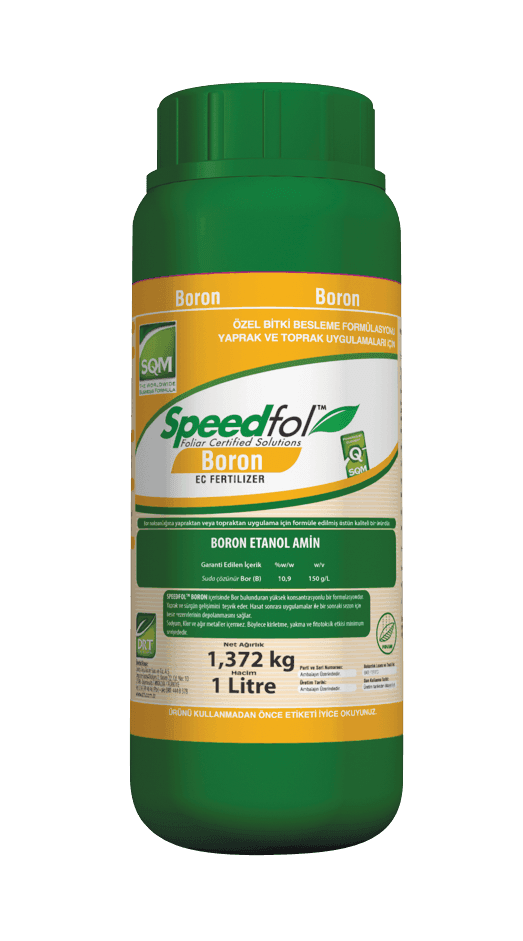
| Boron (B)Water Soluble | 0.8% |
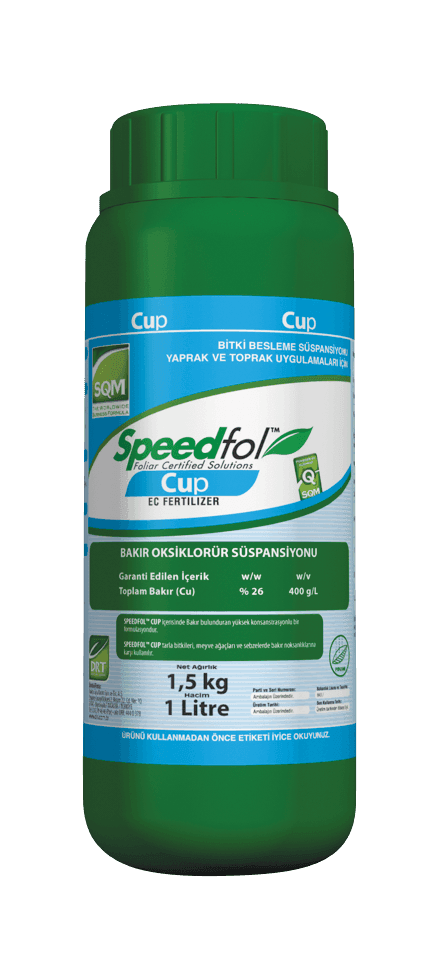
| Copper (Cu) EDTA ChelatedWater Soluble | 0.5% |
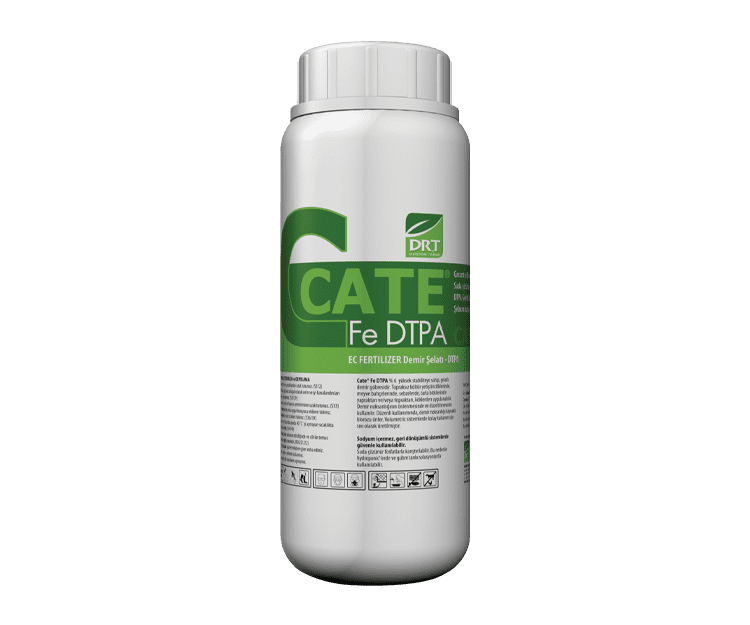
| Iron (Fe) EDTA ChelatedWater Soluble | 4.0% |
| Manganese (Mn) EDTA ChelatedWater Soluble | 3.0% |
| Molybdenum (Mo)Water Soluble | 0.1% |
| Zinc (Zn) EDTA ChelatedWater Soluble | 4.0% |
Docto-Combi is a specially formulated product designed to prevent and correct micronutrient deficiencies in plants. It can be applied both via foliar spray and soil, and contains a balanced combination of chelated essential micronutrients (Fe, Zn, Mn, Cu, B, Mo), ensuring strong plant development, improved yield, and better crop quality.
Micronutrients are vital for healthy plant growth and development. Though required in small quantities, they play a major role in enzymatic and hormonal functions, including chlorophyll production, respiration, protein synthesis, cell division, and energy transfer. Deficiency in any of these elements can result in significant yield and quality losses.
Various soil conditions such as high pH, salinity, intensive agriculture, and low organic matter often limit the availability of micronutrients to plants. In such cases, external application becomes essential. Docto-Combi, thanks to its chelated formulation, ensures the efficient and quick uptake of nutrients by plants, even in challenging soil conditions.
Fruit trees, vegetables, field crops, and ornamentals are particularly sensitive to micronutrient imbalances. Deficiencies are more common in high-yielding areas and can lead to serious agronomic and economic consequences.
Micronutrient deficiencies typically manifest as chlorosis (leaf yellowing), necrosis (tissue death), malformed leaves, stunted growth, flower and fruit drop, and premature leaf fall. If left untreated, plant growth slows, productivity declines, and crop quality deteriorates. Docto-Combi effectively addresses these issues, restoring balance and supporting optimal plant performance.
| Crop | Dosage | Application Timing |
|---|---|---|
| Vegetables (Tomato, Cucumber, Eggplant, etc.) | 50 – 100 g / 100 L water | At the beginning of flowering and every 2–3 weeks thereafter |
| Citrus | 50 – 100 g / 100 L water | Before flowering, before June fruit drop, and during summer shoot growth |
| Apple, Pear, etc. | 50 – 100 g / 100 L water | When fruits reach the size of a walnut and during summer shoot growth |
| Peach, Apricot, Cherry, etc. | 50 – 100 g / 100 L water | After flowering and again two weeks later |
| Vineyard | 100 – 200 g / 100 L water | Just before cluster closure and once or twice every two weeks thereafter |
| Rice | 300 g / 100 L water | At the beginning of tillering, during stem elongation, and one month later |
| Corn | 300 g / 100 L water | When the plant reaches a height of 40–50 cm |
| Cotton | 200 g / 100 L water | Before squaring and approximately two weeks later |
| Sugar Beet | 300 g / 100 L water | At the 6-leaf stage and again one month later |
| Onion | 250 g / 100 L water | 30 days after planting and again two weeks later |
| Peanut, Soybean | 250 g / 100 L water | During flower bud stage and again two weeks later |
| Melon, Watermelon | 200 g / 100 L water | 1–2 months after emergence, followed by 1–2 applications at 1–2 week intervals |
| Ornamental Plants | 50 – 100 g / 100 L water | At the beginning of growth and then every two weeks |
| Hazelnut | 50 – 100 g / 100 L water | At leaf formation stage and again one month later |
| Wheat | 300 g / 100 L water | During the tillering stage |
Cookies are used to personalize content and ads, provide social media features, and analyze our traffic. By selecting “Accept All Cookies,” you agree to the use of all cookies.