
| CONTENT | % w/w |
| Iron (Fe) | 6% |
| Iron (Fe) EDTA Chelated Water Soluble | 6% |
| pH Range | pH 4 – pH 7.5 |
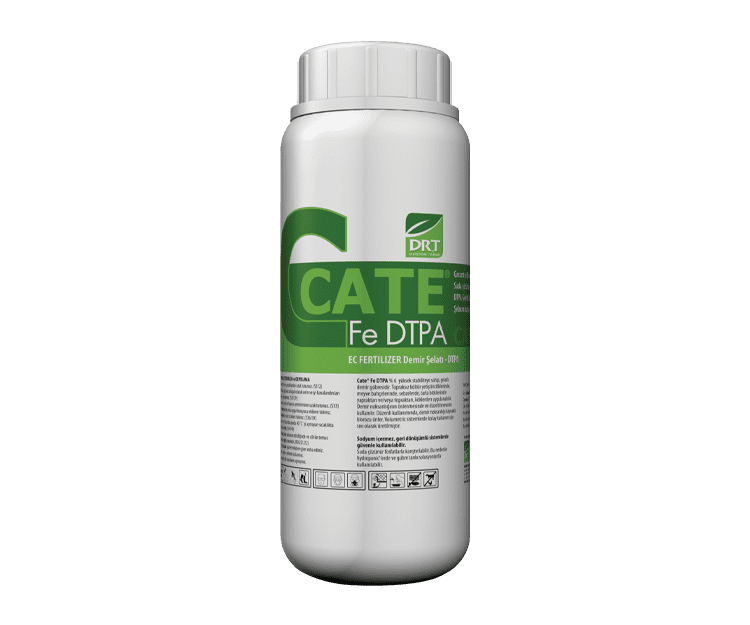
Chelated Iron Fertilizer – Stable, Effective, and Reliable Iron Source
Cate Fe DTPA is a high-quality chelated iron (Fe) fertilizer developed to effectively prevent and correct iron deficiencies in a wide variety of crops. It is manufactured under the quality assurance of Doktor Tarsa, in full compliance with the European Union Fertilizer Regulations. The company holds the TS EN ISO 9001:2000 Quality Management System Certificate, ensuring international standards in production and quality.
Contains iron in DTPA chelated form, ensuring stability and high availability for plants, especially in soils with a pH up to 7.5.
Ideal for both soil and fertigation applications.
Prevents iron deficiency symptoms such as chlorosis (yellowing between leaf veins), weak growth, and reduced crop quality and yield.
Promotes healthy chlorophyll synthesis, leading to vibrant green foliage and stronger plant vitality.
The rates provided below are general recommendations. Exact dosages should be determined by qualified agricultural consultants based on crop growth stage, field observations, and results from soil or tissue analyses.
Add the required amount of Cate Fe DTPA to the tank, partially filled with water, while stirring. After it has been well mixed, top up the tank with water and apply as needed.
Cate Fe DTPA is compatible with many agricultural chemicals and fertilizers. However, if the compatibility of specific products is not known, a jar test is strongly recommended before mixing. Ensure that the pH of the tank solution does not drop below 4 when preparing mixtures with Cate Fe DTPA.
200 – 2000 cc / 100 L water
| Crop | Application Timing | Dose (cc / 100 L water) |
|---|---|---|
| Tomato, Cucumber, Eggplant, Pepper | At the beginning of flowering and repeated every 2–3 weeks | 50–200 |
| Citrus | Before flowering, before June fruit drop, and during shoot growth period | 50–150 |
| Apple, Pear, Quince | When fruits reach walnut size and during summer shoot growth | 50–120 |
| Peach, Apricot, Cherry | After flowering and repeated two weeks later | 50–120 |
| Grape | Before cluster closure and 2 applications at two-week intervals | 60–140 |
| Melon, Watermelon | 1–2 months after emergence and repeated at two-week intervals | 200–250 |
| Crop/Plant Type | Recommended Dose (cc / plant) |
|---|---|
| Young seedlings / saplings | 10–30 |
| Young fruiting trees | 50–100 |
| Mature fruit trees (normal yield) | 80–150 |
| Mature fruit trees (high yield) | 100–150 |
| Citrus | 150–300 |
| Grapevine | 10–30 |
| Cut flowers | 300–700 |
| Strawberry, Raspberry | 500–1000 |
| Vegetables | 250–500 |
Cookies are used to personalize content and ads, provide social media features, and analyze our traffic. By selecting “Accept All Cookies,” you agree to the use of all cookies.