


| CONTENT | % w/w |
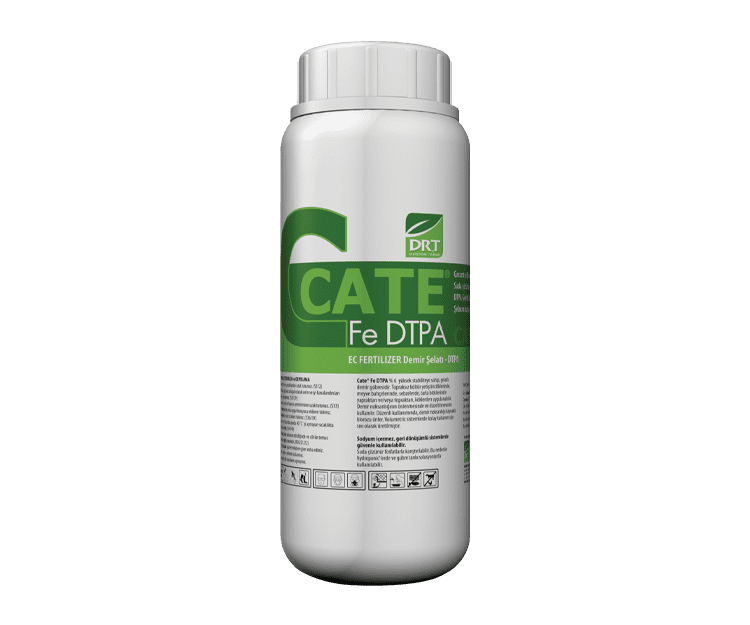
| Water Soluble Iron (Fe) | 6% |
| Iron (Fe) EDTA ChelatedWater Soluble | 6% |
| pH Range | pH 4 – pH 12 |
High-Efficiency Iron Chelate for Sustainable Crop Health
Docto-Fer is a premium iron supplement developed under Doktor Tarsa’s strict quality assurance system, and it complies with the European Union Fertilizer Regulations. Certified by TS EN ISO 9001:2000 Quality Management System, it meets international standards to ensure consistent product quality and effectiveness in crop nutrition.
Iron (Fe) plays a crucial role in the metabolic processes of plants, particularly in chlorophyll synthesis and photosynthesis. It is a vital component of many plant enzymes and is mostly concentrated in the chloroplasts, where energy conversion takes place.
Although iron is often abundant in soil, the bioavailable portion that plants can absorb is usually low, especially in neutral to alkaline soils.
Deficiency becomes more severe in soils with:
Excess lime (Ca)
High manganese levels (Mn)
Heavy metal accumulation
These conditions interfere with iron uptake, often causing visible symptoms in plants.
Because iron is immobile in plants, deficiency symptoms appear first on young leaves, showing as interveinal chlorosis (yellowing between green veins). In cereals, deficiency is seen as yellow and green longitudinal stripes along the leaf.
Fruit trees: apple, pear, peach, plum
Citrus fruits
Vegetables and field crops
Ornamentals and flowering plants
| Crop | Dosage |
|---|---|
| Young saplings | 10 – 20 g / tree |
| Early-fruiting trees | 20 – 50 g / tree |
| Mature trees (normal yield) | 80 – 100 g / tree |
| Mature trees (high yield) | 100 – 150 g / tree |
| Citrus (large trees) | 100 – 150 g / tree |
| Vineyards (per vine) | 10 – 20 g |
| Ornamentals (roses, carnations, etc.) | 500 g / da |
| Annual/Perennial flowers (chrysanthemum, gerbera) | 600 g / da |
| Strawberries, raspberries (per 100 m row) | 500 – 1000 g |
| Vegetables (open field or greenhouse) | 250 – 350 g / da |
| Field crops | 250 – 350 g / da |
Application Method:
Docto-Fer should be applied directly to the soil. Dig a circular trench (15–20 cm deep) around the canopy projection of the tree. Apply the recommended dosage into the trench, then cover with soil and irrigate thoroughly.
For faster absorption, the product can be dissolved in water and poured into the trench before covering with soil. It is absorbed through the roots and transported to all parts of the plant.
When using drip irrigation systems, mix 250 g of Docto-Fer per decare (1,000 m²) with irrigation water and apply through the system.
Cookies are used to personalize content and ads, provide social media features, and analyze our traffic. By selecting “Accept All Cookies,” you agree to the use of all cookies.